How I Used FIFA Collect to Secure 2026 FIFA World Cup Tickets
Part 2: FIFA Collect Explained
When FIFA Collect first launched, a lot of soccer fans dismissed it as just another digital collectible or NFT project. I looked at it a little differently.
As the 2026 FIFA World Cup ticket process became increasingly confusing, expensive, and unpredictable, FIFA Collect stood out as a potentially unique way to secure guaranteed access to tickets.
At the time, fans were being asked to spend thousands of dollars on hospitality packages, enter lotteries with no guarantee of success, and buy tickets before the official draw in December 2025.
FIFA Collect introduced a completely different approach. Instead of simply hoping to get lucky in the lottery, you could buy digital collectibles that included actual ticket rights.
Was it a gamble? Absolutely. Was it confusing? At first, yes.
Did it work? In my experience, it became one of the most interesting and surprisingly effective strategies for securing World Cup tickets.
What Is FIFA Collect?
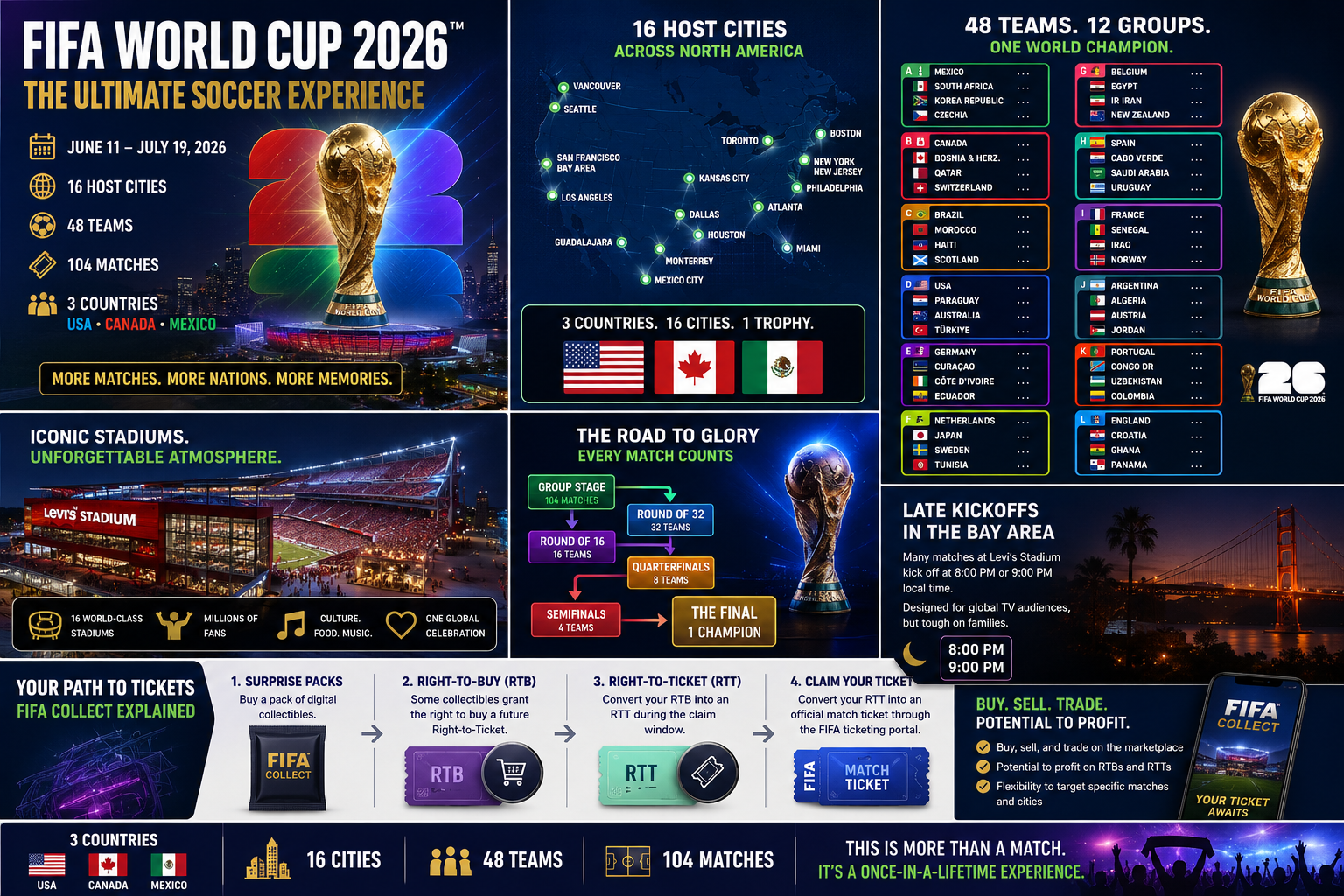
FIFA Collect is FIFA’s official digital collectibles marketplace. For collectors, it offers officially licensed World Cup moments and artwork.
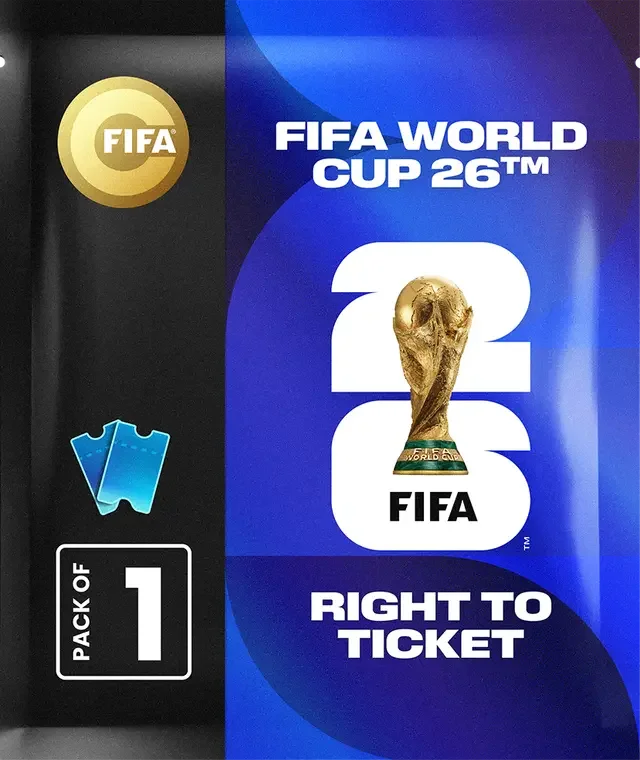
For ticket buyers, the most important features are the Right-to-Buy (RTB) which later were able to be converted to Right-to-Ticket (RTT) to secure access to the 2026 FIFA World Cup. These digital assets can be converted into real FIFA World Cup tickets.
In simple terms: FIFA Collect is not just about collectibles. It can be a legitimate path to guaranteed World Cup tickets.
Why FIFA Collect Was So Interesting
What made FIFA Collect so unique was the combination of:
Guaranteed access to tickets
Ability to buy and sell assets
Potential appreciation in value
Flexibility to target specific host cities
Alternative access to matches that appeared sold out elsewhere
In many ways, it felt like a combination of:
Ticket buying
Trading
Speculation
Travel planning
My Original Strategy
My primary goal was straightforward - I wanted to secure tickets for matches that made sense for our family, knowing that the FIFA Ticket Lottery was unknown and based on luck of the draw. My focus was almost entirely on the San Francisco Bay Area because matches at Levi's Stadium are within driving distance from our home in California. That meant no flights required, minimal hotel costs (if at all), easier logistics as we’ve been to Levi’s Stadium and the chance to attend multiple matches.
At that time last Summer 2025, I had no intention of buying tickets in New York, Seattle, Los Angeles or other host cities. That changed unexpectedly.
The City Surprise Glory Packs
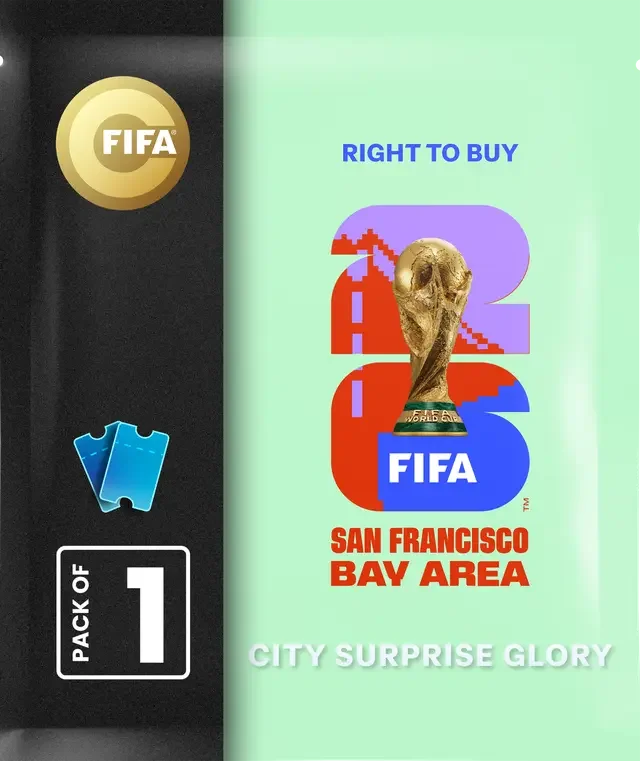
One of the most fascinating features of FIFA Collect was the City Surprise Glory Packs.
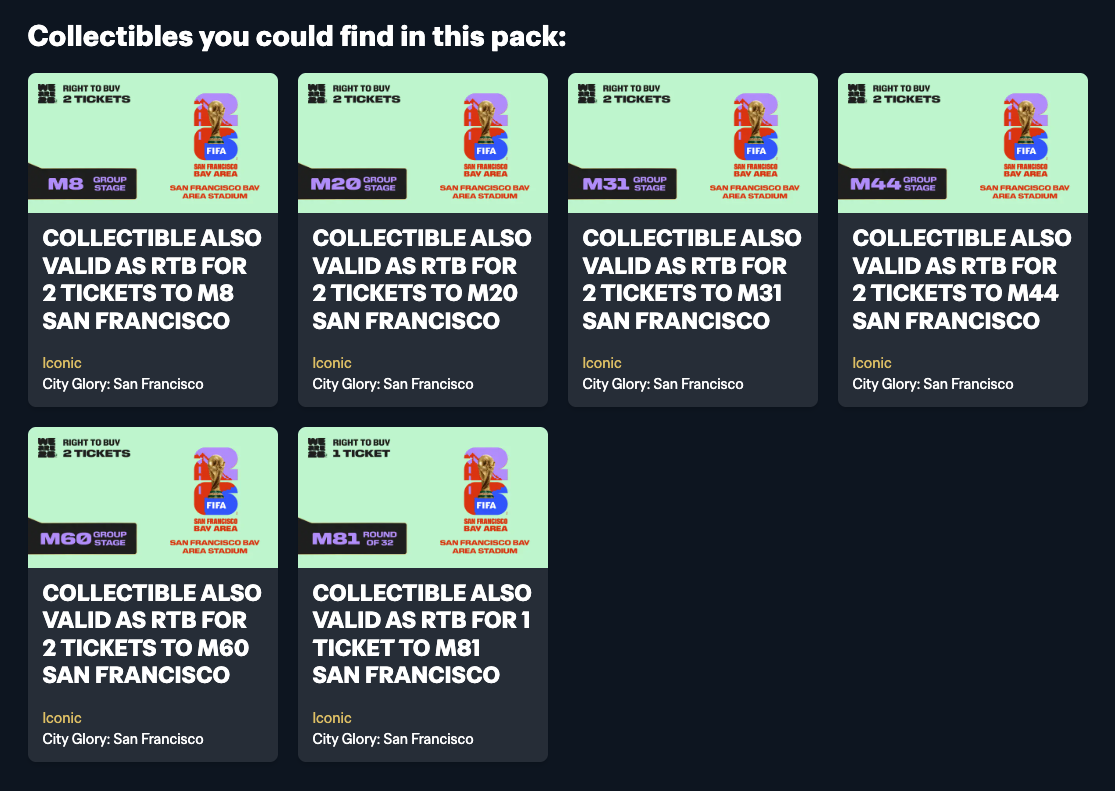
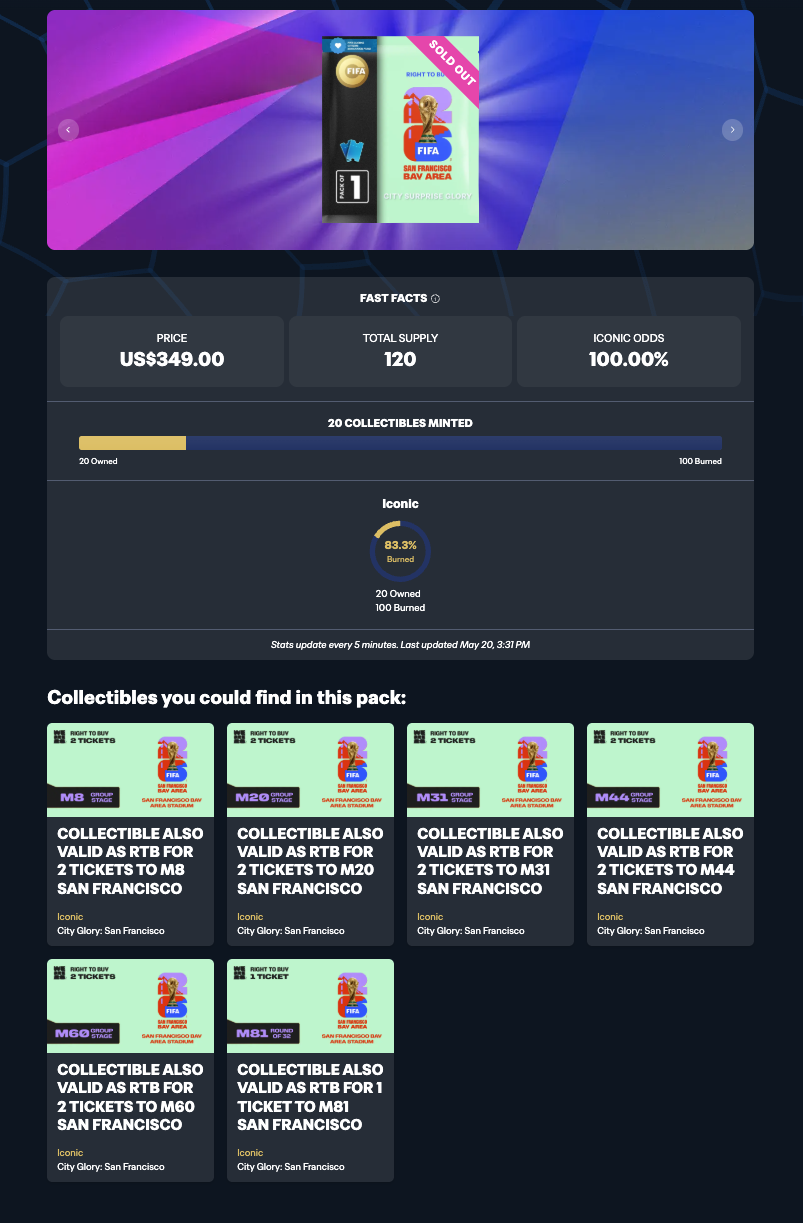
Each pack was tied to a specific host city. For example, I purchased the San Francisco City Surprise Glory Pack. The interesting twist was that you were selecting only the city, not the specific match.
When buying the pack, you knew the host city and whether you would get 1 RTB or 2 RTBs in each pack, depending on if the game was a group stage game or knockout stage game.
You did not know which specific match you would receive, which teams would play or whether the asset would (or could) increase in value. This meant you were effectively betting on the city and the overall World Cup experience rather than a specific matchup or seeing any particular teams.
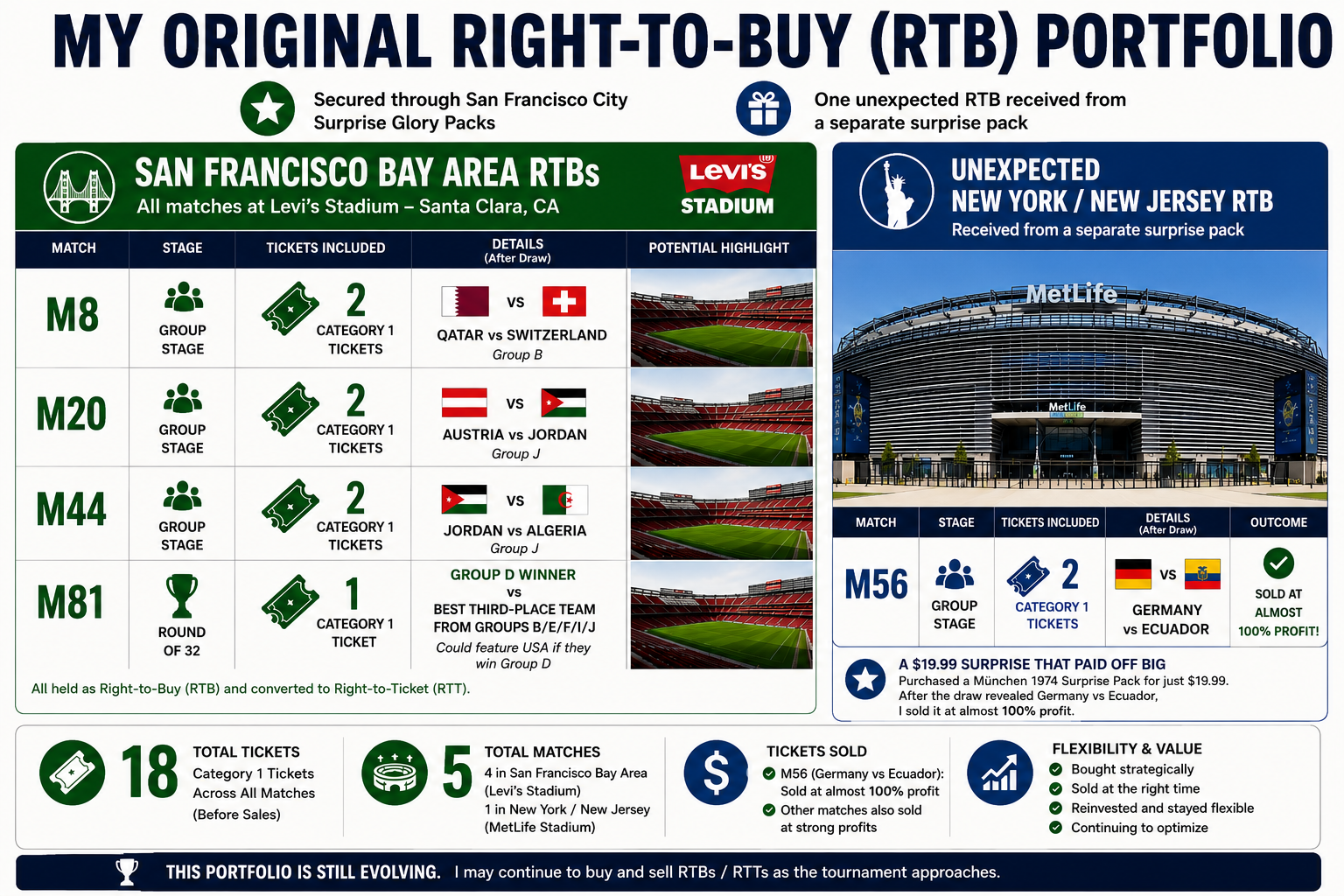
My Original Right-to-Buy (RTB) Portfolio
Through the San Francisco City Surprise Glory Packs, I secured Right-to-Buys for four matches in the Bay Area. I also received one completely unexpected RTB from a separate surprise pack.
A Surprising $19.99 Bonus
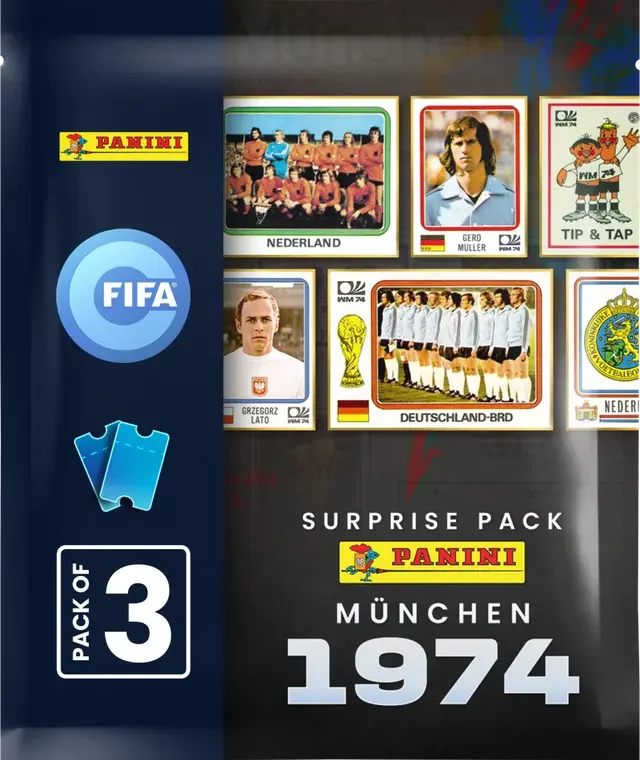
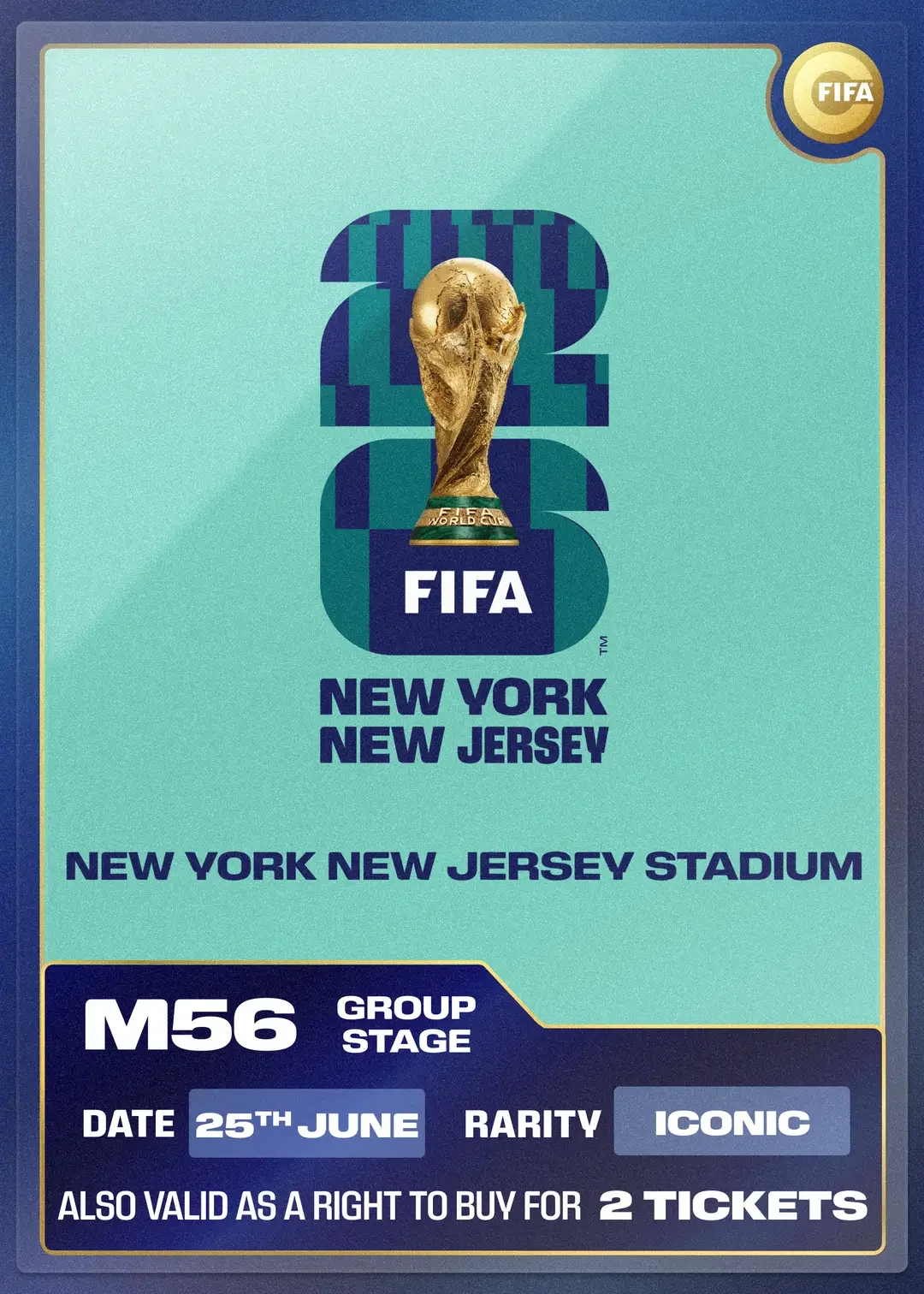
The New York / New Jersey RTB was never part of my original plan. On a whim, I purchased a a few Munchen 1974 Surprise Pack for just $19.99, which include digital player cards and moments and the chance at receiving RTBs. I had no idea what I would receive and no expectation of landing a ticket right tied to one of the tournament’s marquee host cities.
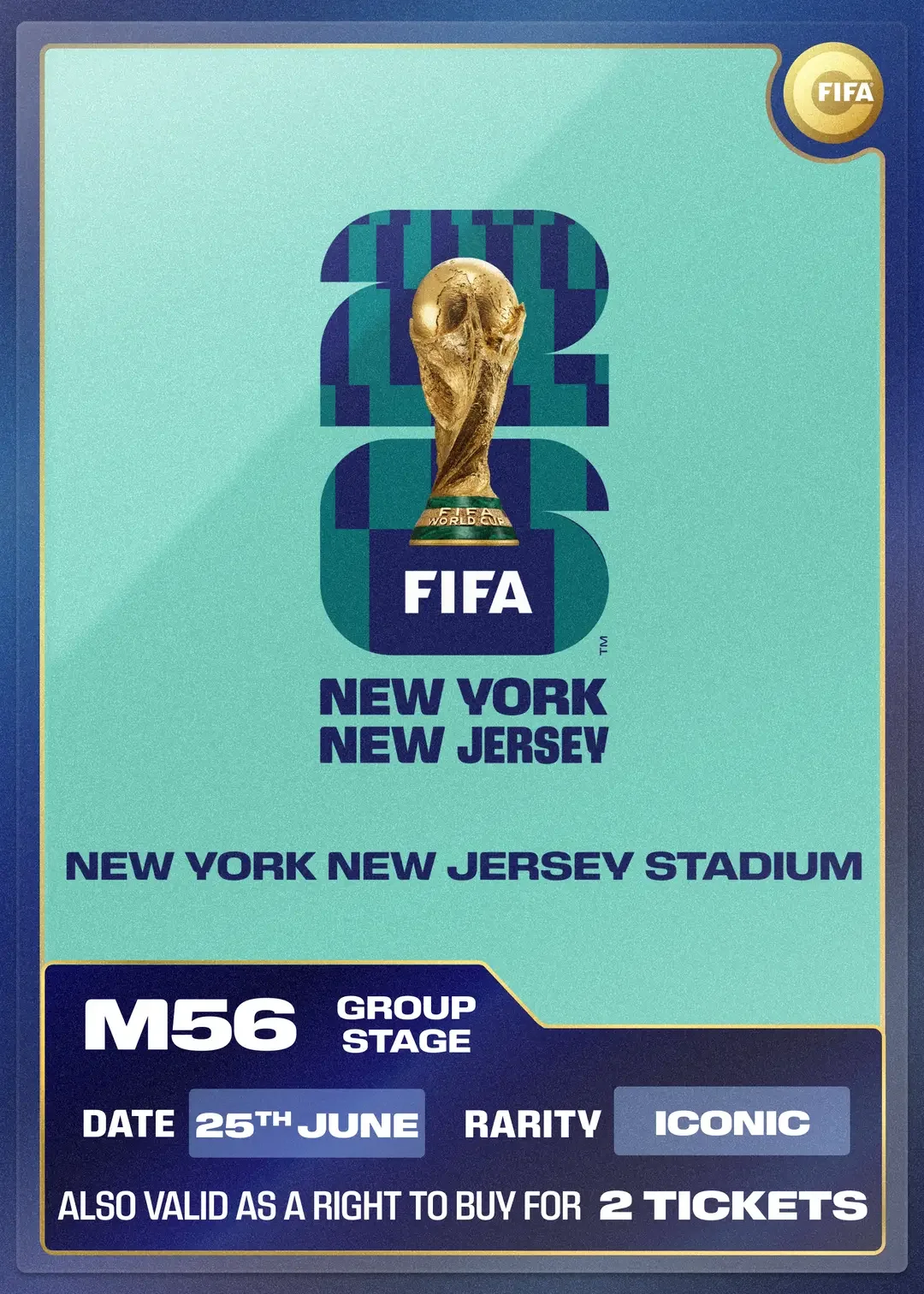
To my surprise, the pack contained an RTB for Match M56 at MetLife Stadium. When I bought the pack, the teams were still unknown, but after the draw, M56 was revealed to be: Germany vs Ecuador. Once Germany was assigned to the match after the FIFA World Cup draw in December 2025, demand increased significantly.
I ultimately sold this RTB at a premium, generating approximately 50%+ profit. Not bad for a $19.99 surprise purchase.
How My San Francisco Bay Area RTBs Turned Out
My primary focus was the San Francisco Bay Area. At the time I purchased these packs, I was hoping to land at least one marquee matchup. After the draw, the Bay Area matches turned out to feature what many fans would consider lower-profile national teams. I was able to secure multiple RTBs in varying ticket amounts for each match.
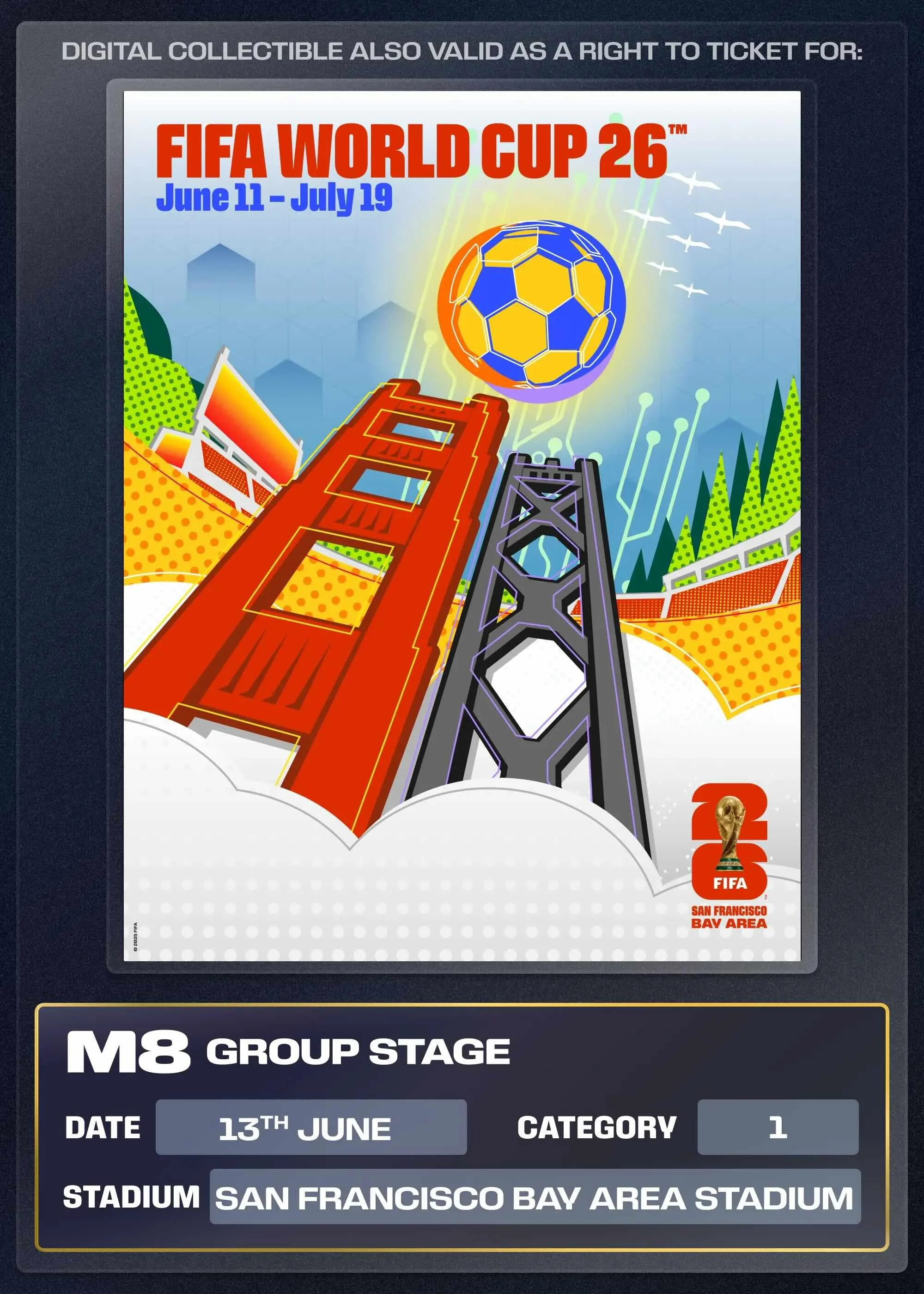
Match M8: Qatar vs Switzerland
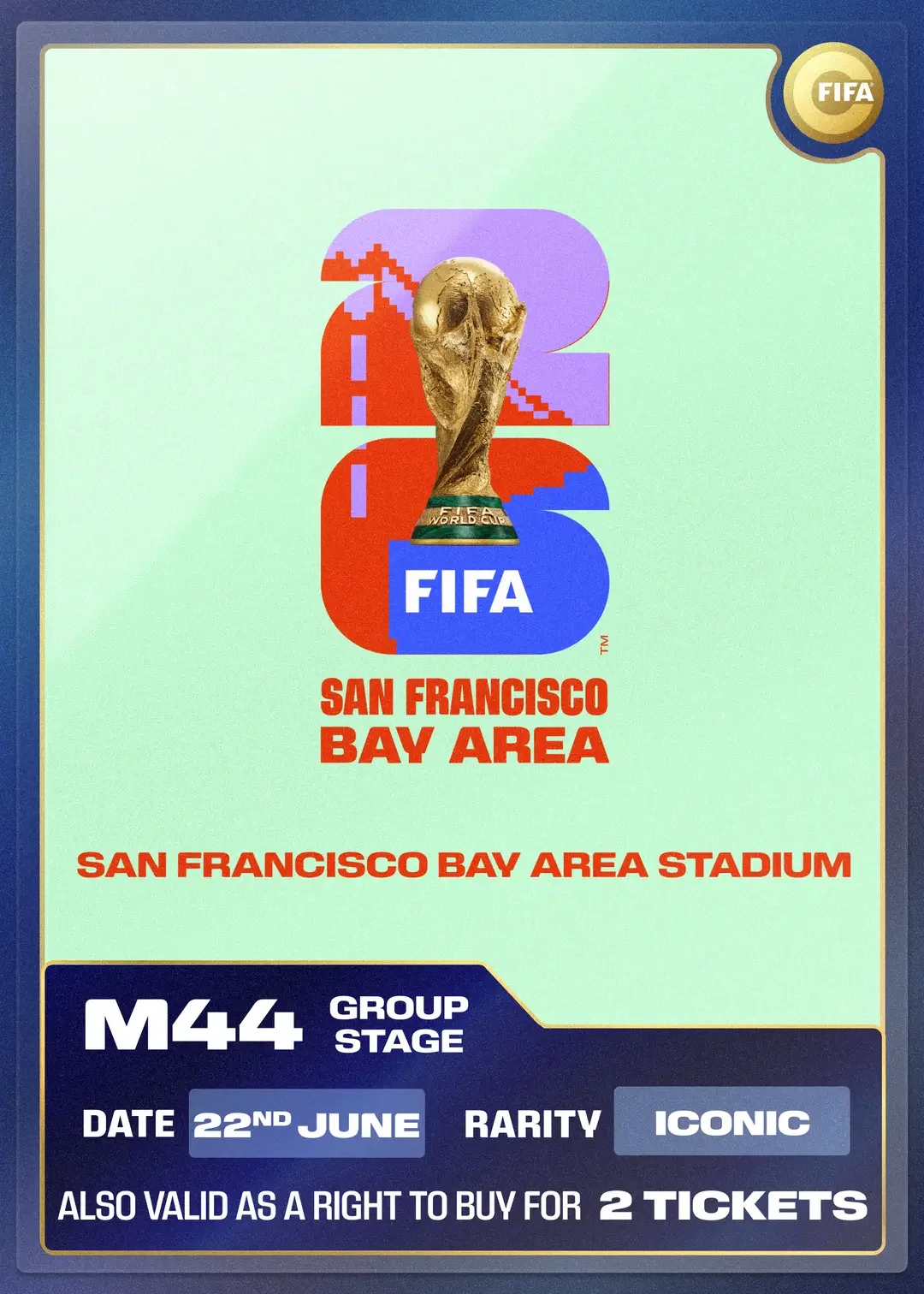
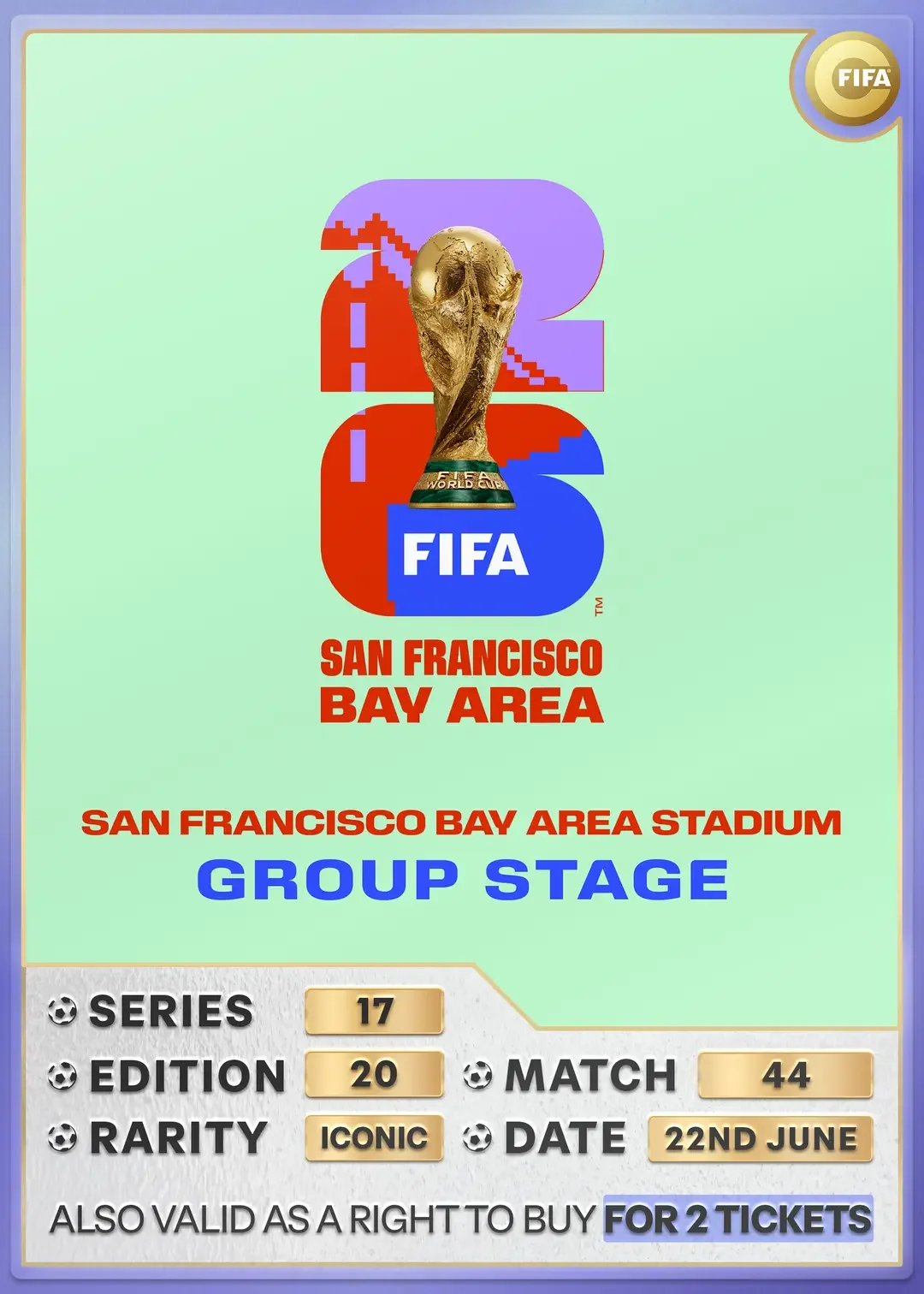
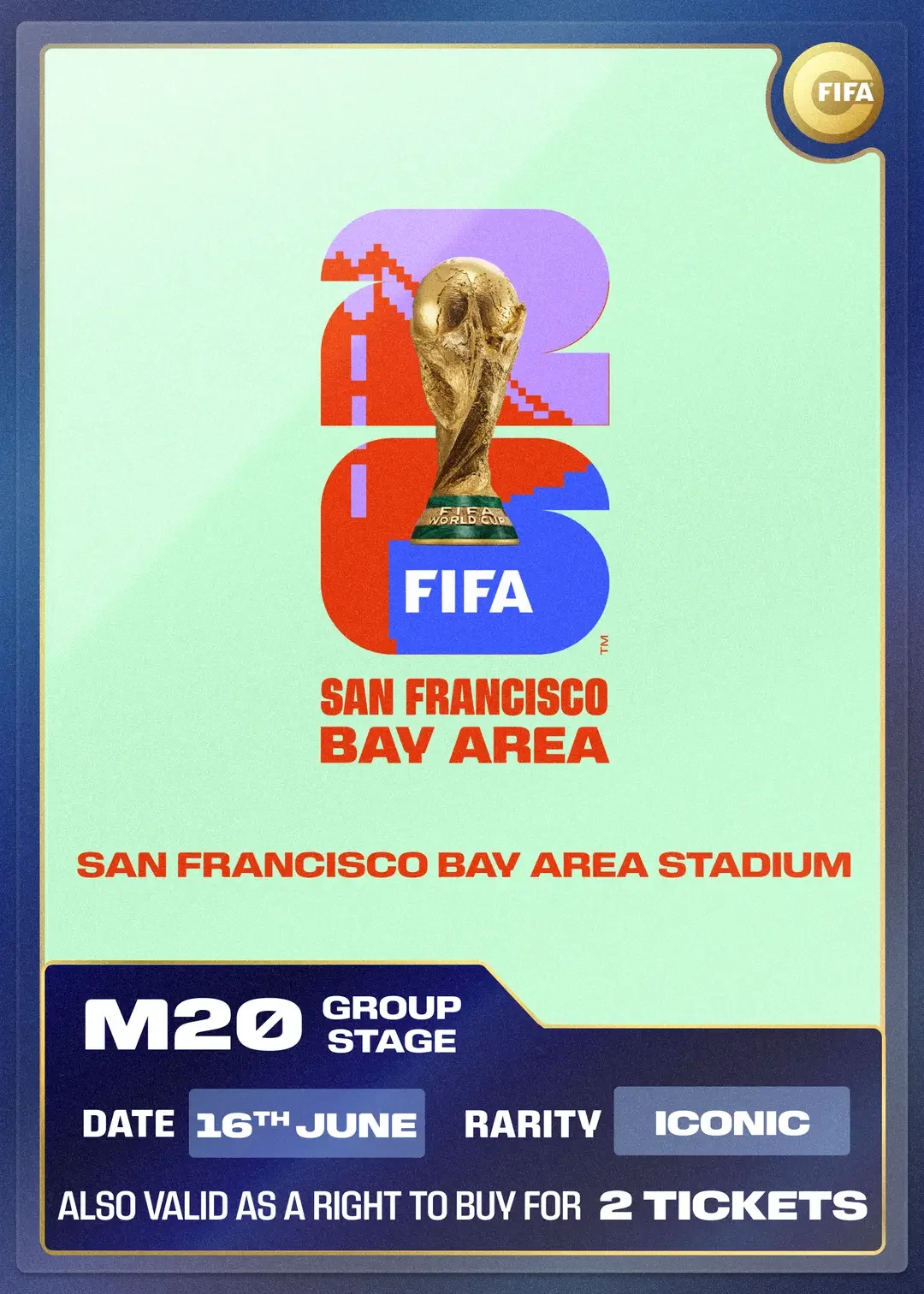
Match M20: Austria vs Jordan
Match M44: Jordan vs Algeria
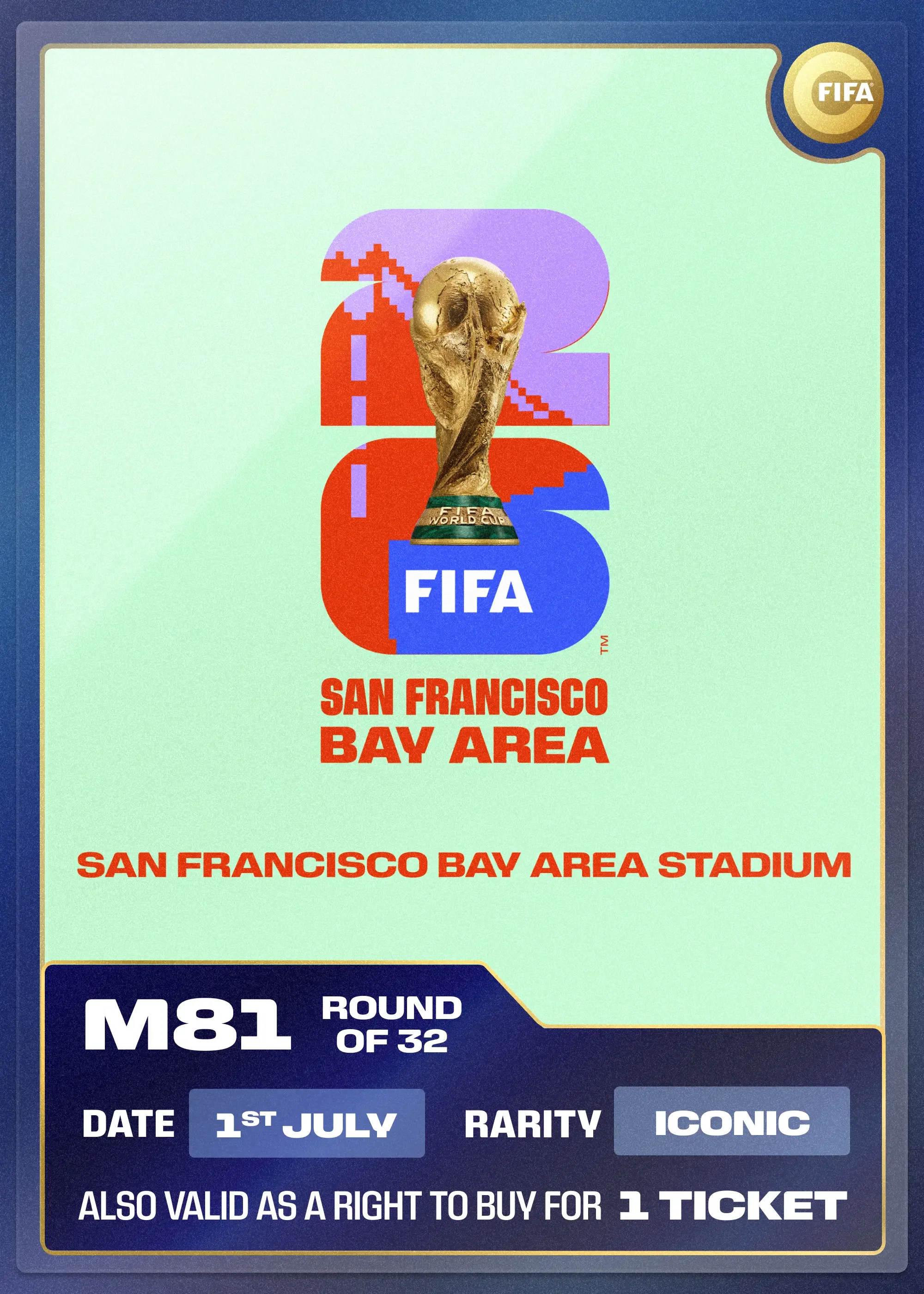
Match M81 (Round of 32): Group D Winner vs. Best Third-Place Team from Groups B, E, F, I, or J
If the United States men's national soccer team wins Group D, they would play in this knockout match, which would dramatically increase both the excitement and potential value.
A Unique Quirk: Group Stage vs. Knockout RTBs
One detail that surprised many buyers was that the number of tickets included depended on the match type.
Group Stage RTBs
Each group-stage RTB included: 2 Category 1 tickets
Knockout RTBs
The Round of 32 RTB (M81) included: 1 Category 1 ticket
This made valuation more complicated. A knockout match was potentially much more valuable, but it included only one ticket rather than two. For families, this distinction was very important.
After receiving an RTB, holders were given the opportunity to convert it into a Right-to-Ticket before the draw occurred. An RTT confirmed access to the actual ticket. Once I converted an RTB to an RTT, I knew I would receive the ticket as long as I completed the process within FIFA’s deadlines. The remaining unknowns were which teams would play (before the draw) and where the seats would be located.
As of May 20, 2026, I Still Don’t Know My Exact Seats
One of the most surprising aspects of the process is that, even after converting RTBs into RTTs and paying for the underlying tickets, I still do not know my exact seat locations.
As of May 20, 2026:
Sections are still pending
Rows and seat numbers have not been assigned
Final ticket issuance is still in progress
This means that despite months of planning and significant financial commitment, the precise seating locations remain unknown. I’ll share screenshots and my thoughts on the final seat assignments in Part 3.
FIFA Collect: Quirks and Challenges
FIFA Changed Stadium Maps and Ticket Categories
Another wrinkle was that FIFA updated its stadium maps and ticket categories during the sales process. Originally, tickets were listed under the standard categories:
Category 1
Category 2
Category 3
Category 4
Later, FIFA introduced more detailed subcategories, such as:
Category 1 Front
Category 1 Standard
Other refined seating designations (Supporters Sections, Premium, Standard, Value, etc)
This made it much harder to compare prices and determine whether any given purchase was truly a good deal. Not all Category 1 tickets were created equal.
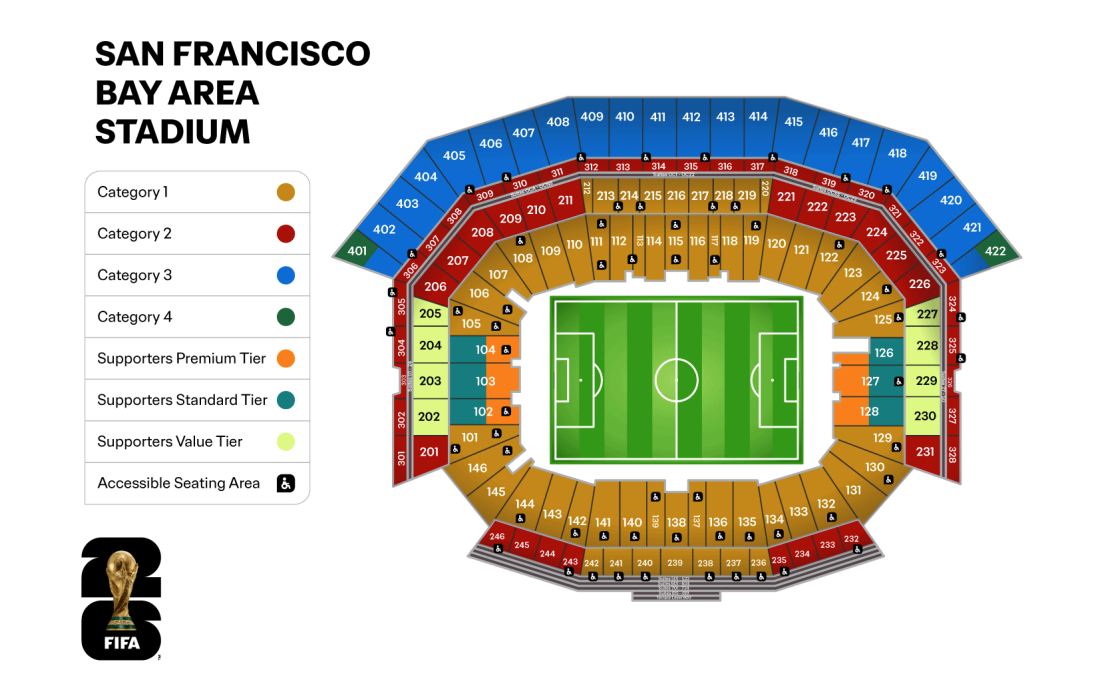
The original San Francisco Bay Area Stadium Map did not look like this! The stadium map was updated the draw to add supports sections and more Hospitality sections. Every stadium map was updated like this, bait and switch?!
Buying and Selling RTBs and RTTs
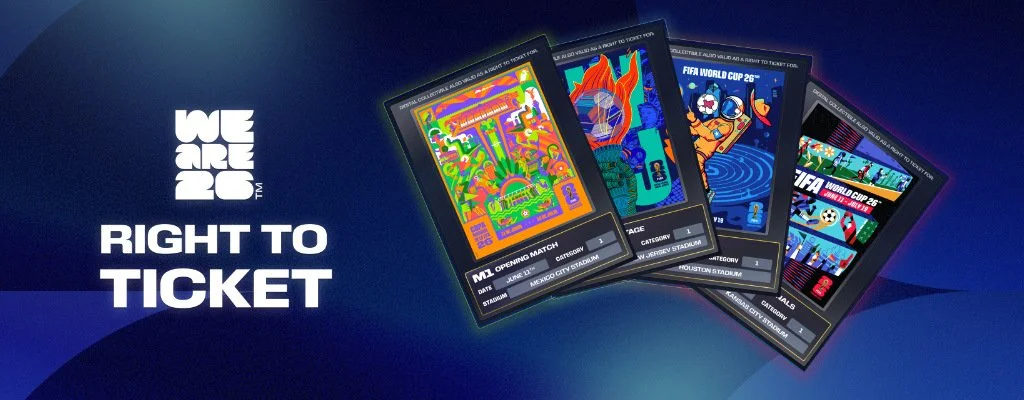
One of the biggest advantages of FIFA Collect is the built-in marketplace. RTBs and now RTTs can be bought and sold like tradable assets.
This creates opportunities to:
Lock in early access
Sell at a profit if demand increases
Reinvest in other matches
Reduce overall costs
I have already sold some RTBs and RTTs, and I may continue to buy and sell as the tournament approaches.
Another Quirk: FIFA Collect Originally Required USDC (Crypto)
One of the most confusing aspects of FIFA Collect in the early days was the payment system. While some initial purchases, such as buying packs or converting certain Right-to-Buys, could be completed with a traditional credit card, the secondary marketplace for buying and selling RTBs and RTTs originally operated in USDC (USD Coin), a cryptocurrency pegged to the U.S. dollar.
For many soccer fans, this introduced an entirely new layer of complexity.
To participate in the marketplace, users often had to:
Create a compatible crypto wallet
Purchase or transfer USDC
Connect the wallet to FIFA Collect
Manage blockchain transactions
Convert funds back into U.S. dollars if they sold assets
For anyone unfamiliar with cryptocurrency, this process felt intimidating and unnecessarily complicated.
Buying Packs Was Easy & Trading Was More Complex
In my experience, there were two very different user experiences on FIFA Collect.
Straightforward Purchases
Some activities were relatively simple and could be completed with a standard credit card, including:
Purchasing Surprise Packs
Buying certain RTBs directly from FIFA Collect
Converting RTBs into RTTs
Marketplace Trading
Buying and selling RTBs and RTTs on the marketplace was more complicated because transactions had to occur using USDC. This meant that even though the currency was designed to track the U.S. dollar, users still had to navigate a crypto-based payment system. That extra step was one reason many fans were hesitant to use FIFA Collect.
Early 2026 Update: Credit Cards Were Added for Marketplace Purchases
Thankfully, FIFA Collect improved the process in early 2026. The platform began allowing buyers to purchase RTTs directly with a credit card, even when assets were listed on the marketplace. This was a significant improvement.
It made FIFA Collect far more accessible to mainstream users who wanted to buy ticket rights without dealing with cryptocurrency. Sellers still received proceeds through the platform, but buyers no longer needed to understand USDC or maintain a crypto wallet just to complete a purchase. Transferring those funds, however, still requires a bit of knowledge to transfer to a crypto wallet and then transfer out to your bank.
Why This Matters
The original USDC-only marketplace was one of the biggest barriers to entry. For experienced crypto users, it was manageable.
For the average soccer fan, it added technical complexity, additional setup steps, unfamiliar terminology, and concerns about security and transfers.
The addition of credit card payments removed much of that friction and made FIFA Collect easier to use for everyday fans.
My Take
The USDC requirement was one of the quirks that made FIFA Collect feel more like a financial trading platform than a traditional ticket marketplace.
It added complexity that many fans probably found intimidating. Fortunately, FIFA simplified the experience by introducing credit card purchases for marketplace listings in early 2026.
That update made the platform much more user-friendly and, in my opinion, significantly increased its usefulness as a legitimate way to buy and sell World Cup ticket rights.
Official FIFA Last-Minute Sales
All throughout 2026, FIFA has seemed to continue releasing additional tickets through its official sales platform. I was able to purchase some tickets directly from FIFA during these last-minute sales.
In several cases, these official tickets were cheaper than comparable FIFA Collect purchases. This reinforced one of the biggest lessons from the 2026 World Cup ticket process:
There is no single perfect strategy. Sometimes buying early provides certainty. Sometimes waiting results in better prices or finding a good resale ticket. Often, success in getting tickets comes down to timing and luck.
Sold Out Doesn’t Always Mean Sold Out: One of the most interesting discoveries is that “sold out” does not necessarily mean unavailable.
Some matches appear sold out on official FIFA ticket channels and extremely expensive on resale platforms. Yet the same match may still be available on FIFA Collect through RTTs, sometimes at a lower effective price. For informed buyers, this can create excellent opportunities.
My Ticket Strategy Is Still Evolving
Even after buying City Surprise Glory Packs, acquiring RTBs and converting to RTTs, selling selected assets and purchasing tickets directly from FIFA, my strategy is still evolving.
I may continue to buy tickets using:
FIFA Collect
Official FIFA sales
Official resale
Hospitality
Secondary marketplaces
The best approach has been to stay flexible and compare all available options.
Keeping the World Cup in Perspective
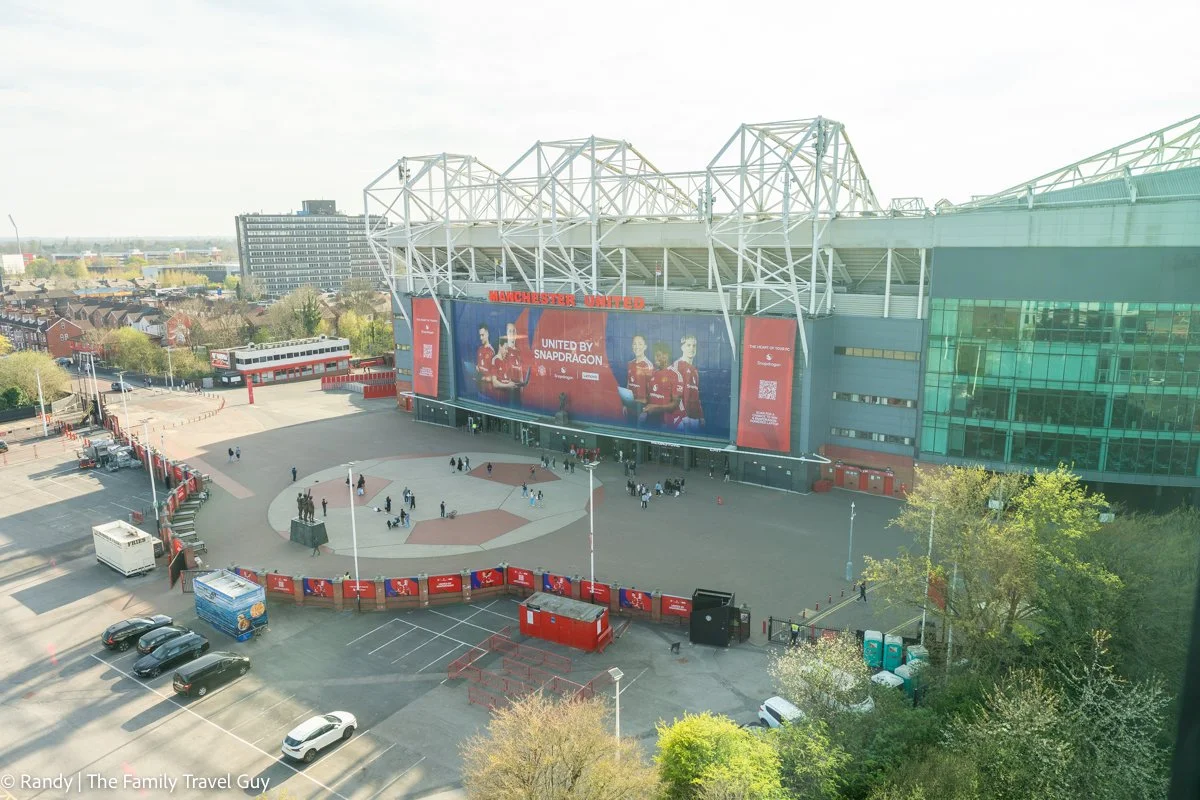
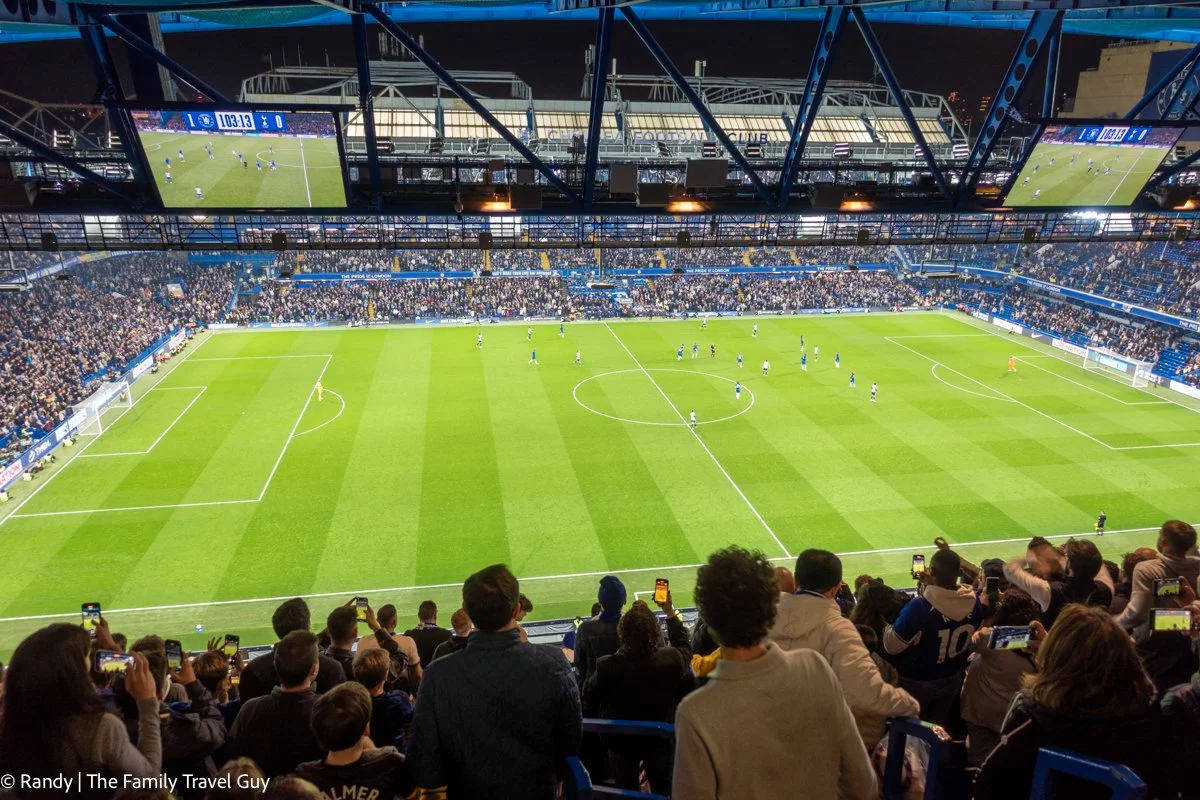
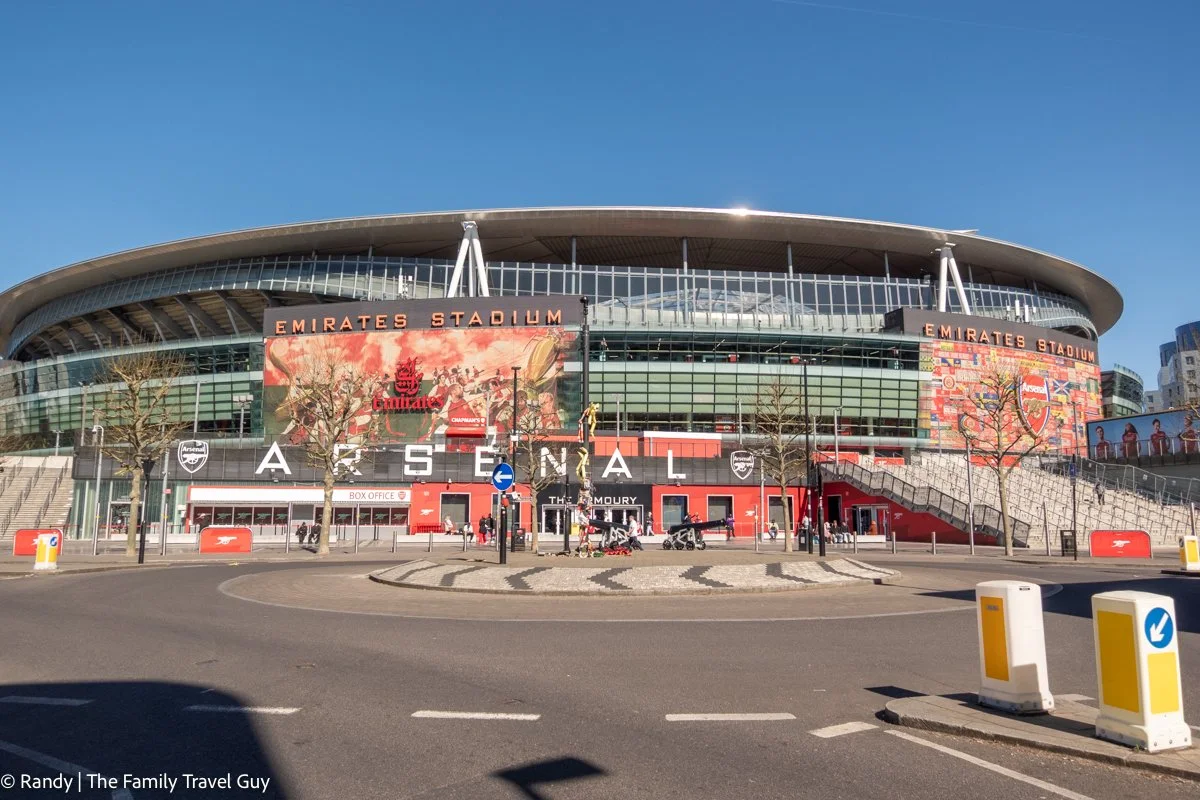
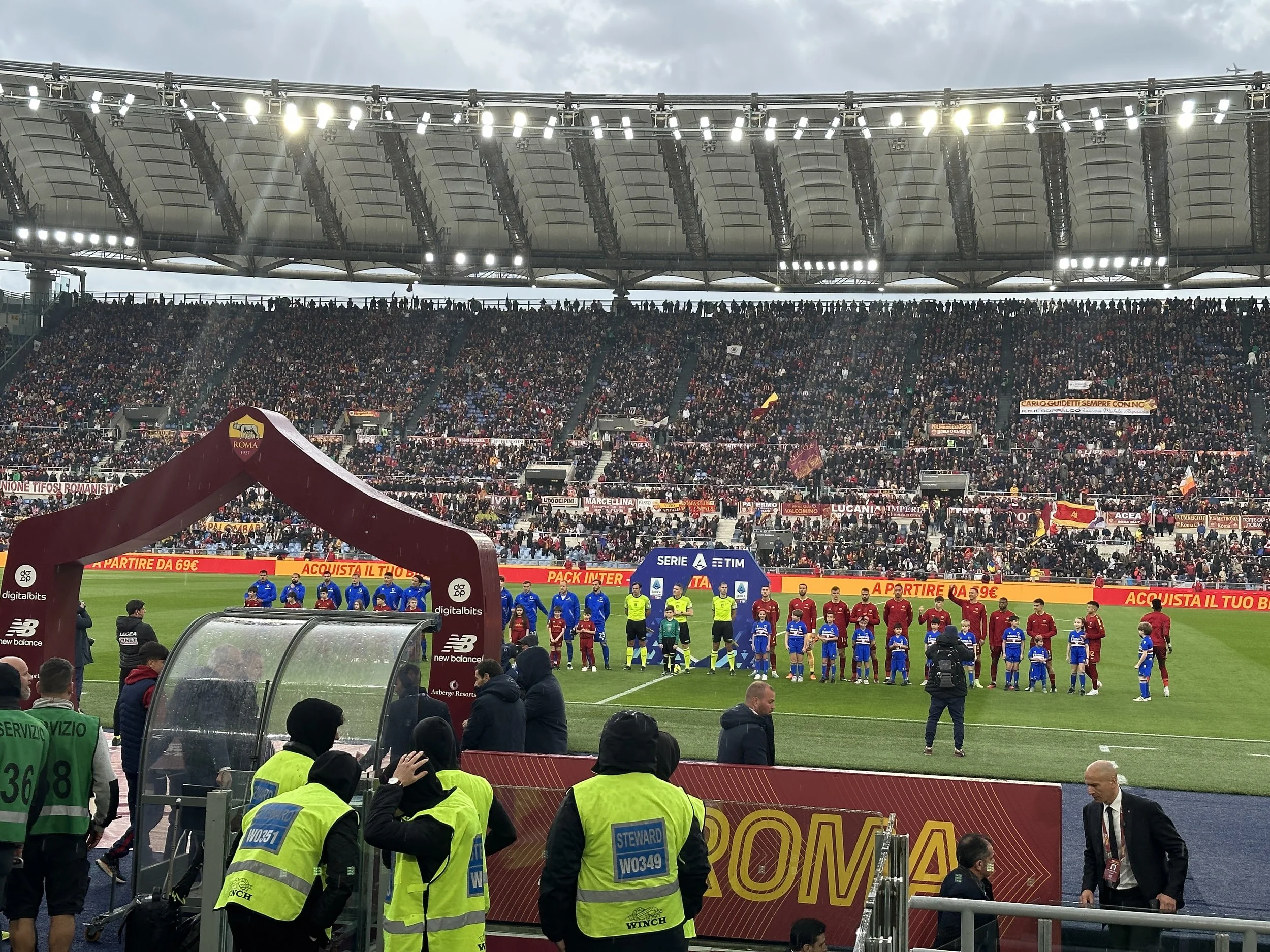
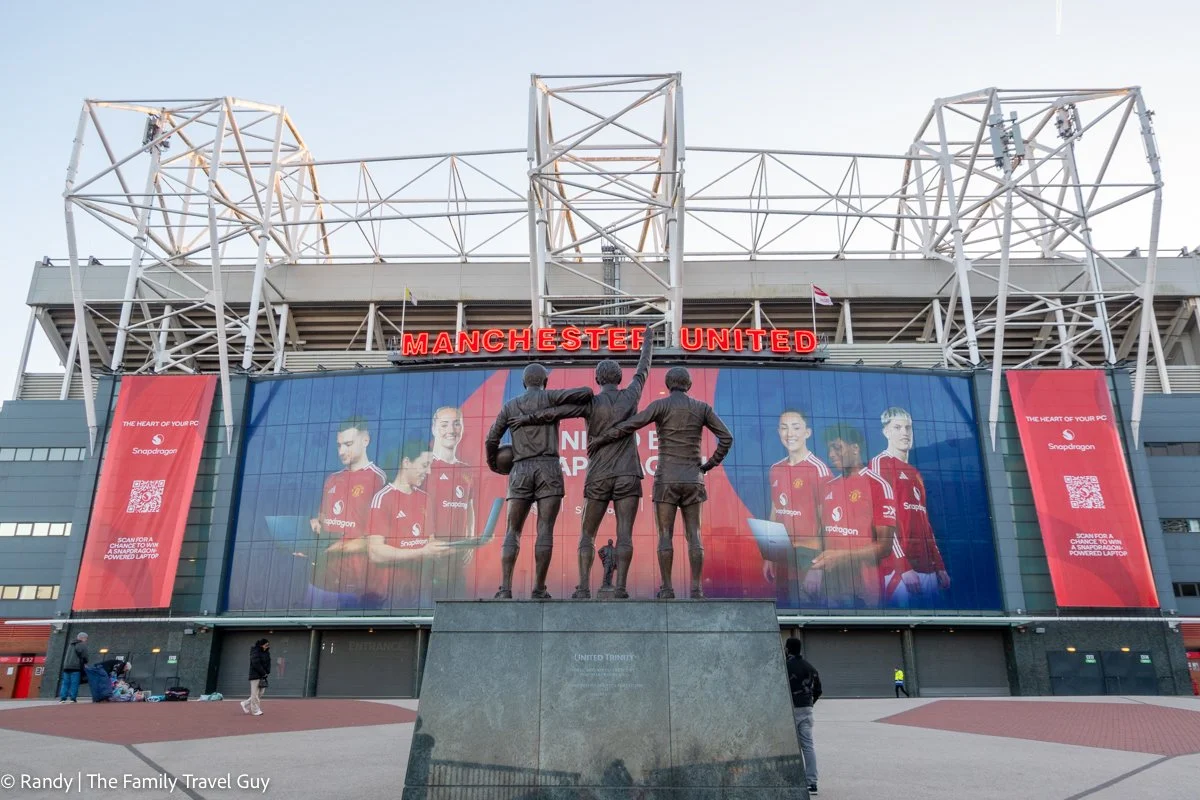
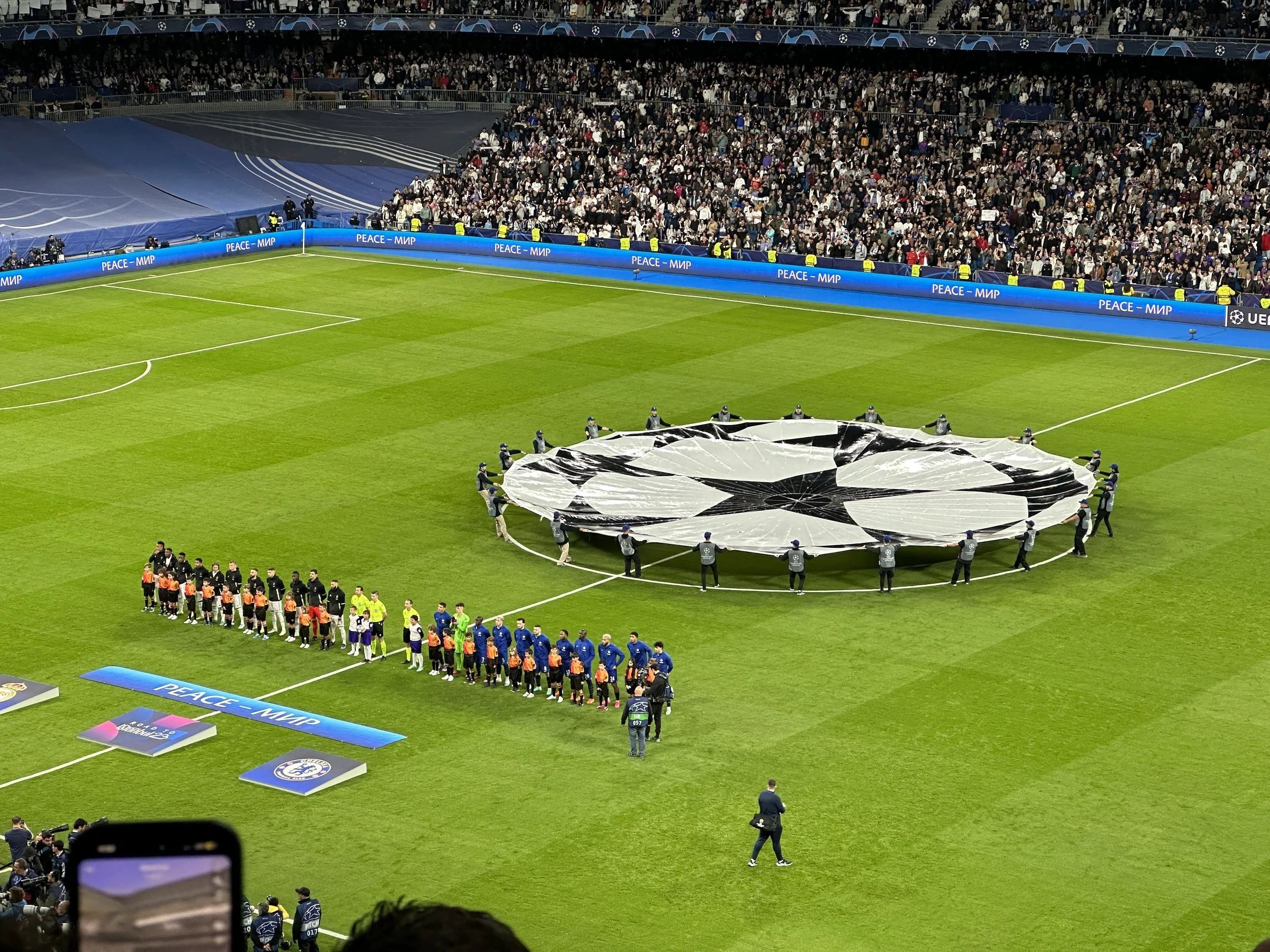
As exciting as the World Cup is, it is worth remembering that soccer around the world can oftentimes be a much. better value, especially being able to attend club matches across Europe at iconic stadiums such as:
Old Trafford
Stamford Bridge
Emirates Stadium
Santiago Bernabéu Stadium
Stadio Olimpico
In many cases, ticket prices for these gam,es were much lower than FIFA World Cup prices and we were able to enjoy premium hospitality experiences, including excellent seats, meals, and stadium tours, for less than certain World Cup tickets. The World Cup is special, but from a pure value standpoint, European club soccer can often offer a better experience for less money.
Final Thoughts
FIFA Collect has been one of the most fascinating parts of the 2026 World Cup ticket process.
It combines ticket buying, collecting, trading, speculation and strategic travel planning. It was absolutely a gamble, but unlike the standard FIFA lottery, it offered something incredibly valuable, which was certainty in getting tickets to a certain city. For a once-in-a-lifetime event, that certainty was worth a lot.
My World Cup ticket strategy is still unfolding. As of May 20, 2026, I still do not know my final seat assignments, and I may continue buying and selling tickets right up until the tournament begins. That uncertainty perfectly reflects the broader 2026 FIFA World Cup ticket experience.
FIFA Collect was not simple. It was not risk-free, but it provided guaranteed access, strategic flexibility, and a fascinating new way to approach one of the world’s biggest sporting events.
I’ll save all exact costs, profits/losses, and final seat assignments for Part 3, where I’ll answer the most important question of all: Was the 2026 FIFA World Cup worth it for our family?